Every travel guide to this stretch of the Corridor repeats the same line: come between November and April, when the rain stops and the whales arrive. That advice is correct for a visitor planning one trip a year around Los Cabos' high season. It has almost nothing to do with what the water at Chileno Bay is actually doing on any given morning.
If you already have a chair on that beach whenever you want one, the calendar that matters is a different one. The reef doesn't run on the same clock as the hotel occupancy rates, and August happens to be a month when those two clocks are pointed in almost opposite directions.
The Season Everyone Books For
The case for November through April is a real one. It's the region's dry season, when weather holds steady and rain stops interrupting plans. It's also whale season, with humpbacks and gray whales moving through the Sea of Cortez and the Pacific from mid-December into spring. Put those two things together and you get what the hospitality industry openly calls Los Cabos' high season, the stretch when the best restaurant tables get booked out weeks in advance and May and November are treated as the shoulder weeks when reservations finally loosen up.
None of that is wrong. It's just answering a different question than the one a resident is actually asking, which is closer to: when is the water itself at its best, not when is Los Cabos at its most popular.
What the Reef Is Actually Doing Right Now
Here's where the two calendars split. According to Cabo Adventures' snorkeling guide to Chileno Bay, the dry season from November through May does deliver the most weather-stable, consistent conditions, but spring water temperatures run cooler, around 72.9°F. July through November is a separate window entirely, one where water temperature climbs as high as 81.1°F and clarity hits its peak, with average visibility running 51 to 60 feet on calm days.
That's not a small gap. It's the difference between a wetsuit-optional swim in April and a warm, clear one in August, in the exact months the broader tourism calendar treats as off-season.
Dry Season (Nov–May) | Warm Season (Jul–Nov) | |
|---|---|---|
Water temperature | Cooler, around 72.9°F in spring | Warmer, up to 81.1°F |
Visibility | Most weather-stable and consistent | Peak clarity, 51–60 ft average |
Crowd level | High season, best tables booked weeks out | Shoulder to off-peak |
What's happening offshore | Whale migration, December–April | Calm seas, fewer boats |
Right now, in the second half of August, you're standing in the second column.
The bay's Blue Flag certification, backed by weekly water quality testing, is part of why that clarity holds up rather than degrading in summer heat the way it might elsewhere. No wastewater reaches the bay, and the testing regime is stricter than most international benchmarks. It's one reason the reef looks as good in August as anything the dry season can offer, just warmer.
There's a simple system for checking conditions on any given day before you even walk down the boardwalk.
A flag posted near the lifeguard tower tells you what you're getting into before you get wet. Green or blue means calm water. Yellow signals mild surf worth taking seriously. Red closes the bay outright.
The Clock Inside the Day
Even in the right season, Chileno Bay runs on its own daily rhythm, and it rewards showing up early far more than it rewards showing up at all.
- 7 to 9 a.m. The water is glassiest here, before wind or boat traffic disturbs it. Parking, which is free along the highway near Km 12.5, is easy to find.
- 9 to 11 a.m. The free lot starts filling. Tour boats and catamarans from the marina typically arrive around midday, which is the last comfortable window before the beach picks up its resort-day energy.
- After 1 p.m. Wind tends to pick up along this part of the Corridor, and the water goes from calm to choppy. It's still a fine beach afternoon. It's a worse snorkeling one.
None of this is a secret exactly, but it's the kind of detail that only shows up when you've actually watched the parking lot fill more than once.
Two Bays, One Morning
Santa Maria Cove sits about five minutes down the highway, and it's worth treating as part of the same morning rather than a separate trip. The two beaches are built differently. Santa Maria's sand is coarse and pinkish, heavy enough that it doesn't cloud the water when small waves roll in, which gives it an edge in shoreline visibility. Chileno's sand is finer and its access easier, with an ADA-accessible boardwalk, working showers, and free shade palapas if you're there before the crowd claims them.
A route that's worked for a lot of people who know both beaches well: snorkel Santa Maria first, while the light and visibility are at their best, then move to Chileno by mid-morning to dry off, shower, and stretch out on softer sand before the wind arrives. It turns two separate errands into one loop.
What You're Actually Swimming With
The fish life close to shore at Chileno Bay is denser than a casual glance suggests, and a lot of it stays close enough to the boulder fields that you don't need to swim far to see it. On a clear August morning you're likely to spot:
- Parrotfish, working the reef surface with audible scraping sounds as they graze on algae
- King angelfish, patrolling in pairs along the rock structure
- Cortez angelfish, a species found nowhere else on the planet outside the Sea of Cortez
- Threebanded butterflyfish, usually moving in loose schools
- Cortez rainbow wrasses, darting in and out of the boulders in their long, streaked bodies
Most of this sits in six to fifteen feet of water, close enough to shore that a strong swimmer barely needs fins to get there.
Where to Eat When You're Already Salted and Sandy
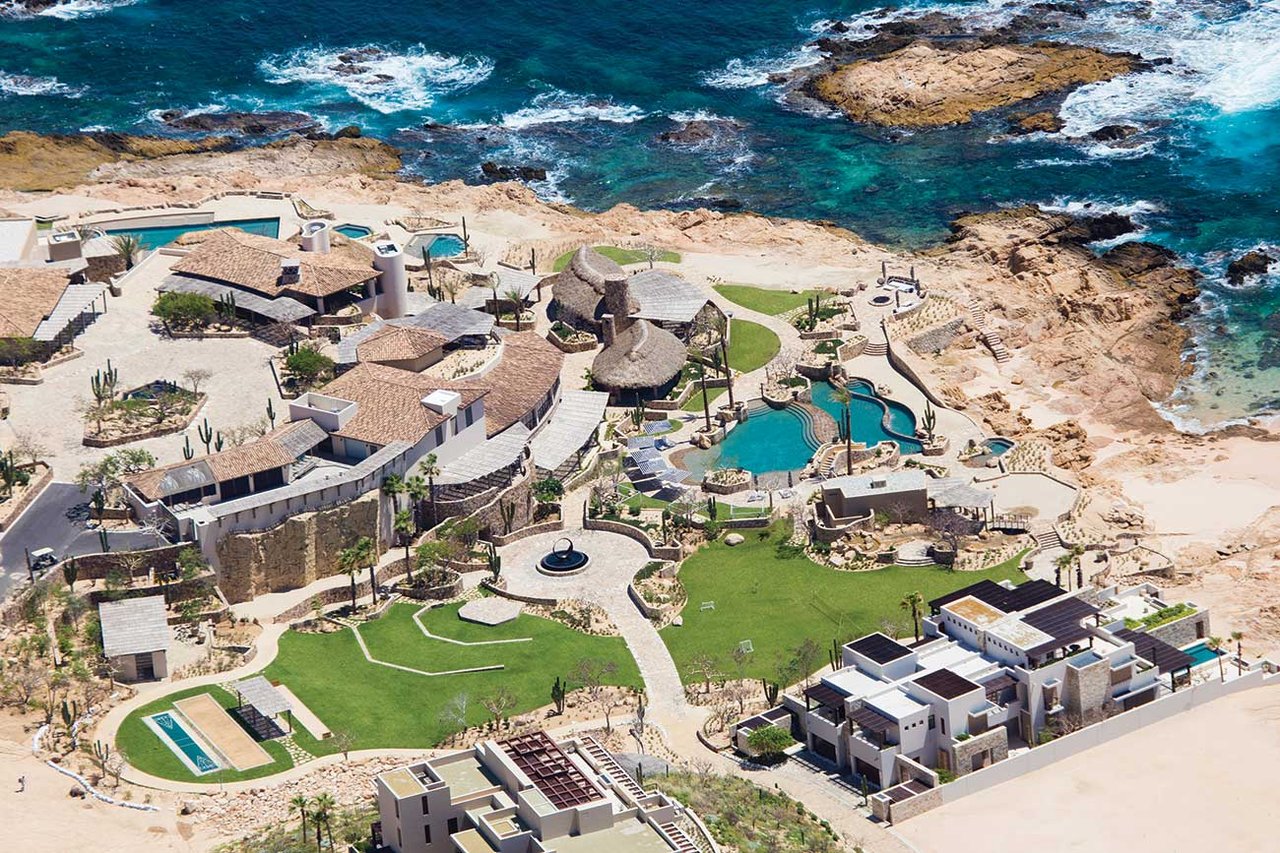
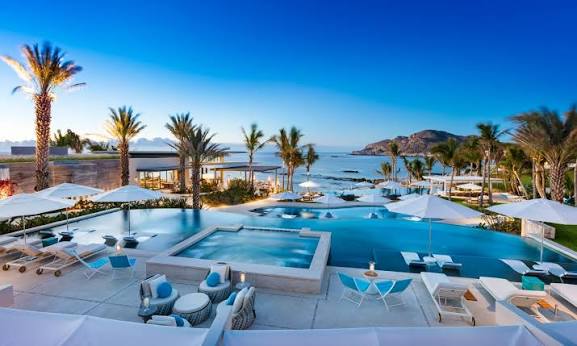
Chileno Bay Resort & Residences sits right at the edge of the beach, and its restaurants have become part of the daily rhythm here whether or not you're a guest of the hotel.
YAYA is the one worth knowing by name. Chef Eliana Godinez runs an open-hearth kitchen built around Mediterranean and Latin American influences, working alongside her husband Orli Del Angel, the resort's executive sous chef. The menu leans on heirloom ingredients pulled from Baja's mountains, desert, and sea, which turns out to share more with Mediterranean cooking than you'd expect.
For something less composed, COMAL is the resort's signature Latin American room, set against direct Sea of Cortez views. TnT is the beachside taco and tequila spot for the days you want lunch in your feet-still-sandy state. El Molino, the courtyard coffee shop, pours organic beans grown in Chiapas if you're stopping through before a swim rather than after one.
The Part Worth Remembering
The high season calendar isn't wrong about Los Cabos generally. It's just optimized for a different visitor, one planning a single trip around whale migrations and dry weather. The reef at Chileno Bay is working off its own numbers, and right now those numbers favor whoever's already close enough to check the flag on a Tuesday morning instead of booking eight months out.
That's the advantage of actually being here. The postcard season and the swimming season aren't the same thing, and August belongs to the second one.
If you're already spending your mornings on this stretch of coast and want to talk through what else is changing along the Corridor, from new dining rooms to what's opening next at the resorts nearby, Victoria Real Estate Co. is easy to reach. Let's Connect.