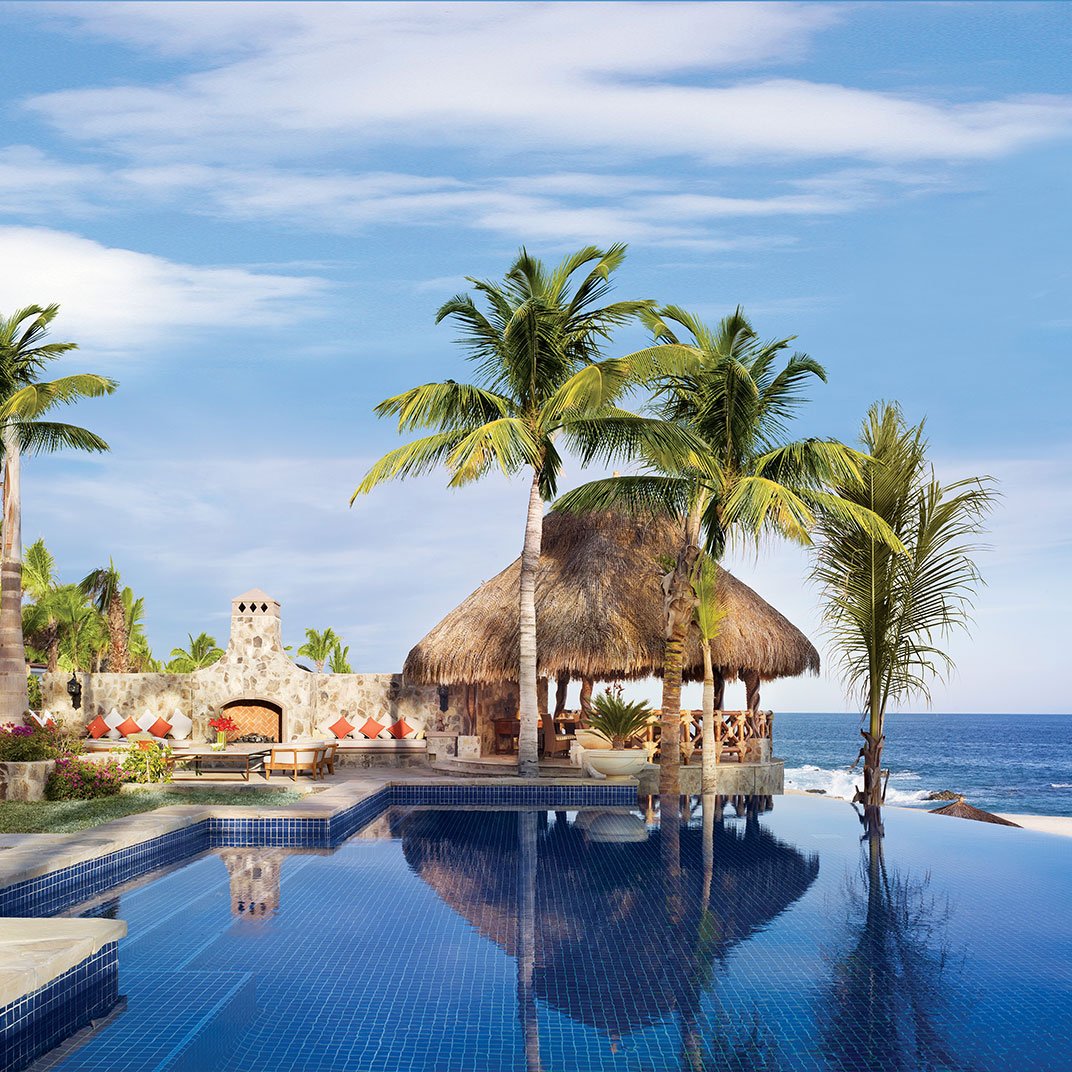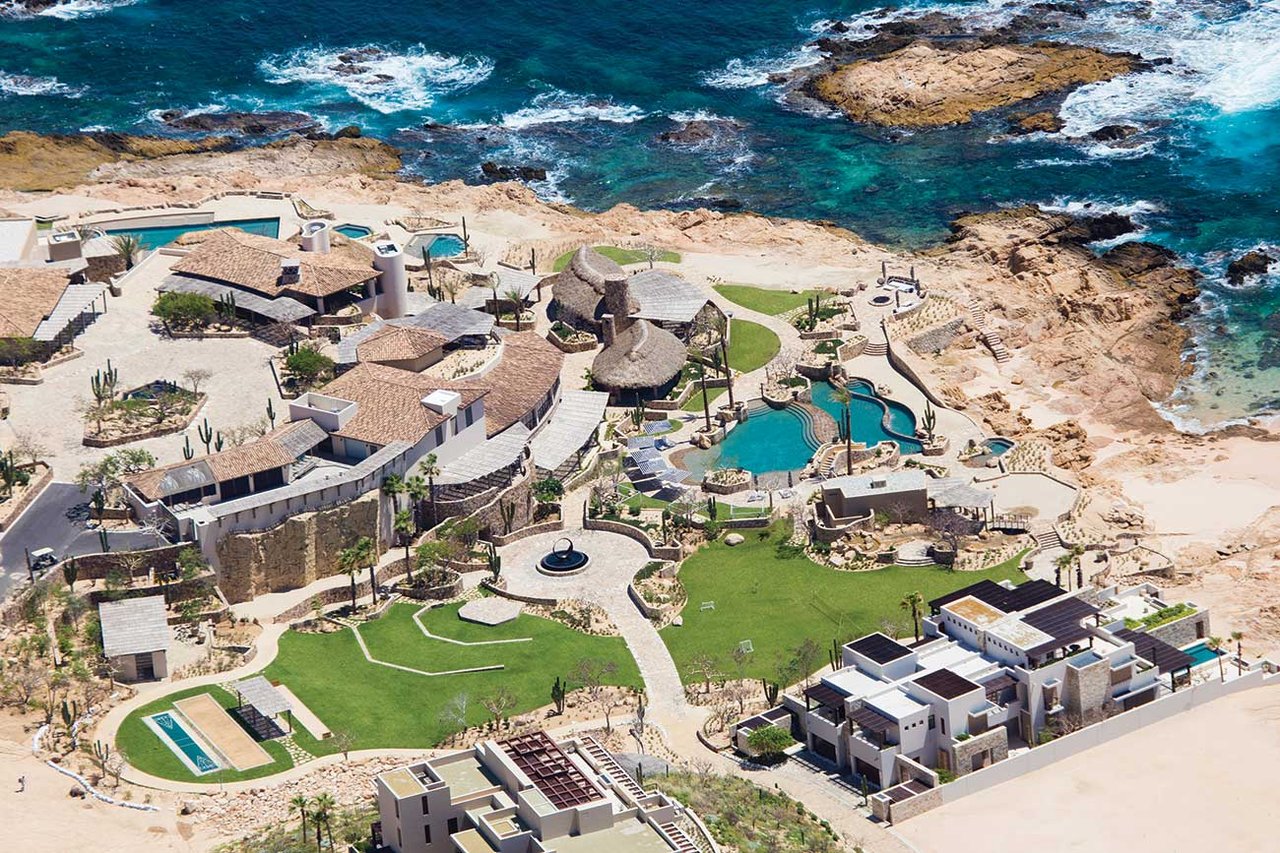
"We're in Hurricane Alley. We get battered by hurricanes."
That's Russ Hewitt, director of agronomy at Twin Dolphin Club, describing the ground his team maintains along Santa Maria Bay. He's not talking about a bad year. He's talking about every year, and specifically about the stretch running right now, from late August through October, when the Eastern Pacific sends its heaviest tropical activity toward the southern tip of Baja. If you own at Maravilla and the last few weeks have felt like the slow part of the calendar, that's the visitor's read on this season. It isn't the resident's read, and it isn't the turf team's.
The season nobody photographs
Los Cabos sits in an odd geographic pocket. The Eastern Pacific hurricane season runs officially from May 15 through November 30, but the real risk window compresses into three months: August, September, and October, when sea surface temperatures off the peninsula climb high enough to sustain a storm. Local forecasters this year are calling for an elevated season tied to developing El Niño conditions, projecting somewhere around 9 to 10 tropical storms for the broader region, with 5 to 6 reaching hurricane strength and 2 to 4 climbing into major hurricane territory, category 3 or higher. September carries the worst of it historically. That's not a marketing detail. That's the reason Baja California Sur's Civil Protection Council convened early this year and inspected all 44 emergency shelters across the municipality before peak season arrived.
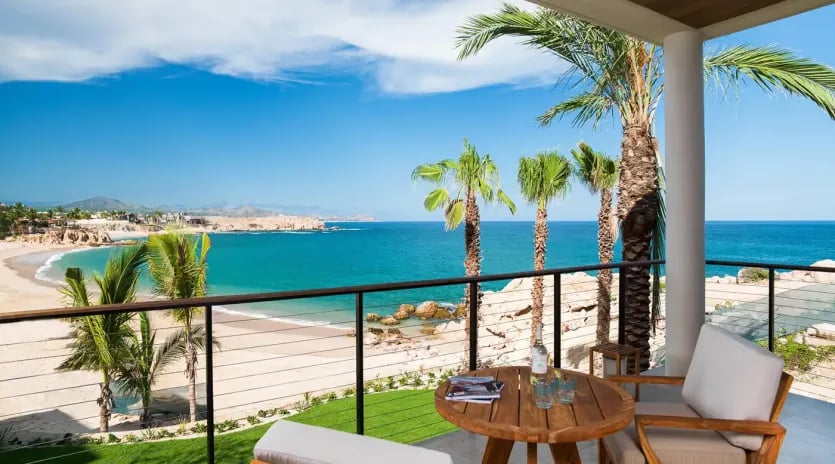
None of this makes daily life at Maravilla dramatic. Most days between now and October will be sunny with the occasional squall that clears fast. But the ocean the club sits on, the two miles of Blue Flag certified beach that give Maravilla its name recognition, is doing something different underneath the surface than it does in December. And forty feet inland, on the other side of Highway 1, Twin Dolphin's golf course is absorbing the same weather with a different set of consequences.
Why the course survives what the beach absorbs
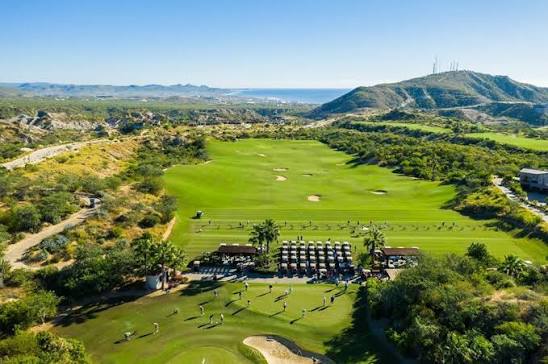
Twin Dolphin is the only Audubon International Signature Sanctuary Gold Level Club in Mexico, one of just 13 outside the United States to hold that designation. It's not a plaque earned once and forgotten. It's the result of infrastructure built specifically for a course that has to survive an annual rainfall of 8 to 10 inches arriving almost entirely in a ten-day stretch, on an arid site where every piece of fertilizer and equipment crosses the border before it reaches the fairways.
What that infrastructure actually looks like, according to Hewitt:
- Solar power feeding course operations
- A reverse osmosis desalination plant supplying irrigation water in a region with no reliable freshwater source of its own
- Robotic mowers handling maintenance work that would otherwise compete with storm prep for staff hours
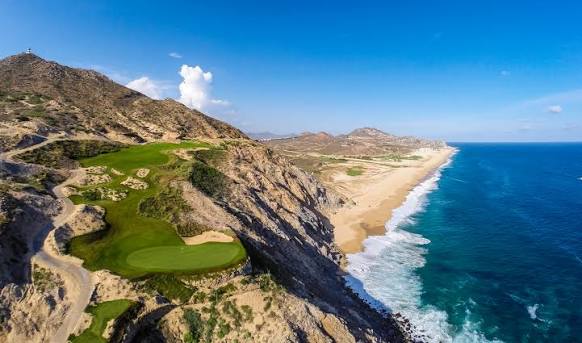
This is the unglamorous version of what members eventually experience as a "perfectly conditioned" course in the dry months. The conditioning doesn't start in November. It's being tested right now, during the exact weeks when the course is least likely to be photographed for a brochure. A golf property built into three major arroyos, the dry channels that flash flood fastest during tropical downpours, has to be engineered to shed water quickly or it doesn't reopen on schedule. Twin Dolphin's system is why it does.
The proof shows up in March, not August
The payoff for that engineering isn't abstract. Every year in early March, Twin Dolphin hosts the Cabo Collegiate, a 54-hole stroke play tournament that has become one of college golf's most competitive early-season stops. This year's edition ran March 1 through 3, hosted by the University of Arkansas for the 16th consecutive year, with a field of 15 teams and 8 of the country's top 25 programs, including Vanderbilt, Arizona State, Oklahoma State, and Ole Miss.
The tournament carries a real stake beyond the trophy. For the fourth time in its history and the third year running, the individual medalist has earned an exemption into the PGA Tour's World Wide Technology Championship at Diamante Cabo San Lucas each November, meaning a college junior can play his way from an amateur leaderboard at Twin Dolphin straight onto a PGA Tour card. That only happens because the course, at 7,156 yards and a par of 71, holds tournament conditioning through a Baja spring that follows directly on the heels of the season the turf team spends bracing for storms. The quiet months are the ones that make the visible month possible.
What's actually open this week
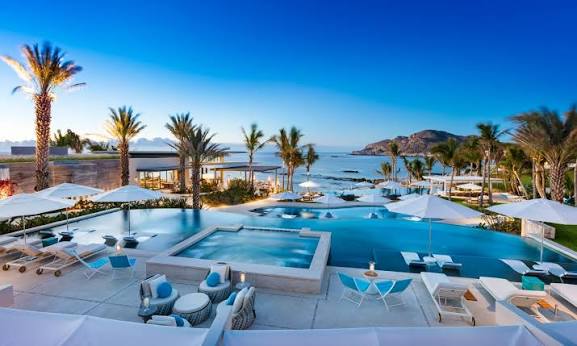
None of this changes what a member does on a Tuesday afternoon in late August. The Club's rotation is running its normal course. Ecco, the signature oceanfront restaurant, is still serving its centerpiece table, La Mesa, alongside a list of more than 70 rare tequilas. El Mercado is still the morning stop for coffee and a smoothie before the heat sets in. Papalote is doing its usual work as the arcade and sports bar leaning into Mexican comfort food, and the Red Doors at holes 5 and 12, the club's stocked comfort stations, are open on the days anyone plays through. Marea is still the beachfront gathering spot with its wood-fired pizza oven and its view straight down Santa Maria Bay.
The club's private glamping site, Dos Arroyos, and its calendar of Mexican Fiestas and paintball showdowns run year-round, hurricane season included. Nothing at Maravilla shuts down for three months. What changes is the backstage work keeping it open, and that work is easiest to miss precisely because it's designed not to be visible.
The countdown already running
There's a second calendar layered underneath all of this, and it's the one most owners actually track. Whale watching season along the Cabo San Lucas Flora and Fauna Protection Area opens each year on December 15 and typically runs into mid to late April, with January through March delivering the heaviest concentration of humpback and gray whale activity in the waters Maravilla fronts. That means the current stretch of storm-watching and turf maintenance sits almost exactly halfway through the gap between one whale season closing and the next one opening. Members who were on property in March watched whales breach from the same stretch of coastline where the agronomy team spent September fighting arroyo flooding six months earlier. Both seasons draw on the same infrastructure. One is just easier to see.
The part worth remembering
The obvious story about late August in Los Cabos is that it's the season to wait out, the gap between one high point and the next. That story misses what's actually happening on the ground at Maravilla. The reason the beach stays swimmable, the course stays tournament ready by March, and the whales have a coastline worth returning to in December all trace back to a handful of systems built to survive exactly the weeks that feel the quietest. Russ Hewitt's team isn't taking it easy right now. They're doing the work that makes the rest of the calendar look effortless.
If you're weighing what ownership at Maravilla or a similar Los Cabos community actually looks like month to month, not just in the brochure season but through the stretch most listings skip past, Victoria Real Estate Co. can walk you through it directly. Let's Connect.